Published 16 November 2026
Is your heat pump struggling to keep your home comfortable? Perhaps it’s getting noisy, breaking down more often, or no longer cooling the room properly during summer.
At Climate Systems, we help homeowners across Te Awamutu, Cambridge, Hamilton and Ōtorohanga decide whether their existing heat pump needs servicing, repairs or replacement.
Your heat pump needs repeated repairs
A single fault doesn’t necessarily mean your heat pump needs replacing. However, if repair bills are becoming a regular expense, it’s worth comparing the cost of another repair with a new installation.
For an older system with a major component failure, we consider its overall condition, parts availability and repair cost before recommending the next step.
It’s struggling to heat or cool your room
If your heat pump takes longer to make the room comfortable, an inspection is a sensible starting point. Dirty filters, restricted airflow or a fault may be affecting its performance.
The system may also be the wrong size for the space—particularly if you’ve renovated or changed how you use the room. Correct sizing helps your heat pump deliver comfortable, efficient heating and cooling.
It’s becoming unusually noisy
New rattling, grinding or vibration deserves attention. A repair may resolve the problem, but on an ageing unit, the condition of the rest of the system also matters.
We can investigate the noise and explain your options before you commit to a replacement.
The existing position no longer suits your home
Replacing a heat pump is an opportunity to review its location and airflow.
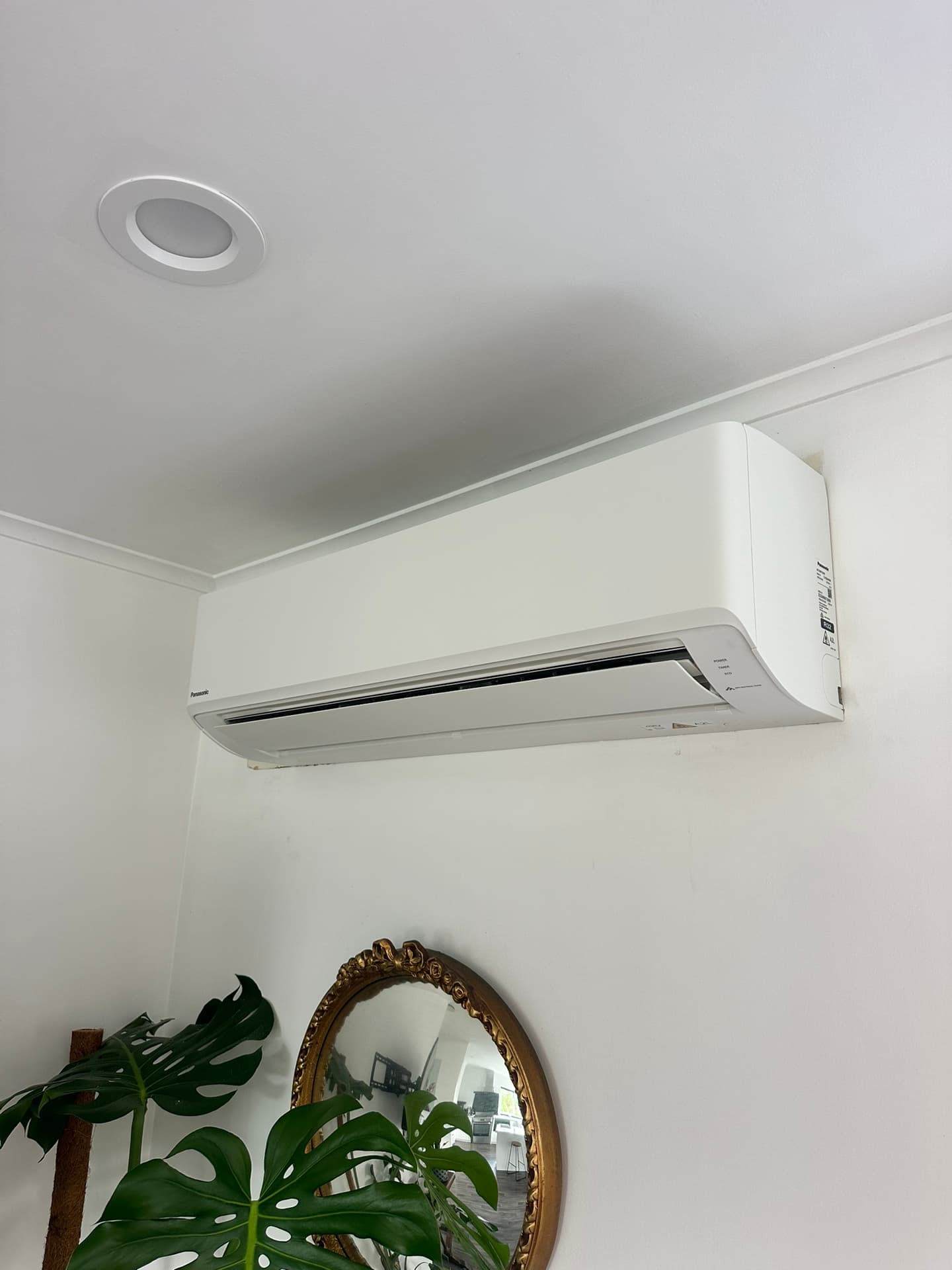
You may prefer a high-wall unit instead of a floor console, or a different position that better suits your furniture and room layout. We assess the space and discuss suitable options with you.
Should you service, repair or replace?
An older heat pump that operates reliably and meets your needs may still have useful life left. Age alone doesn’t decide whether it needs replacing.
Our assessment considers:
- The unit’s age and overall condition.
- The fault and likely repair cost.
- Availability of replacement parts.
- Your home’s heating and cooling requirements.
- The condition of the existing pipework, drainage, mounting and electrical supply.
A replacement quote should clearly explain what can be retained and what needs renewing.