Published 8 November 2026
Why Homeowners Expect Ventilation to Make a Difference
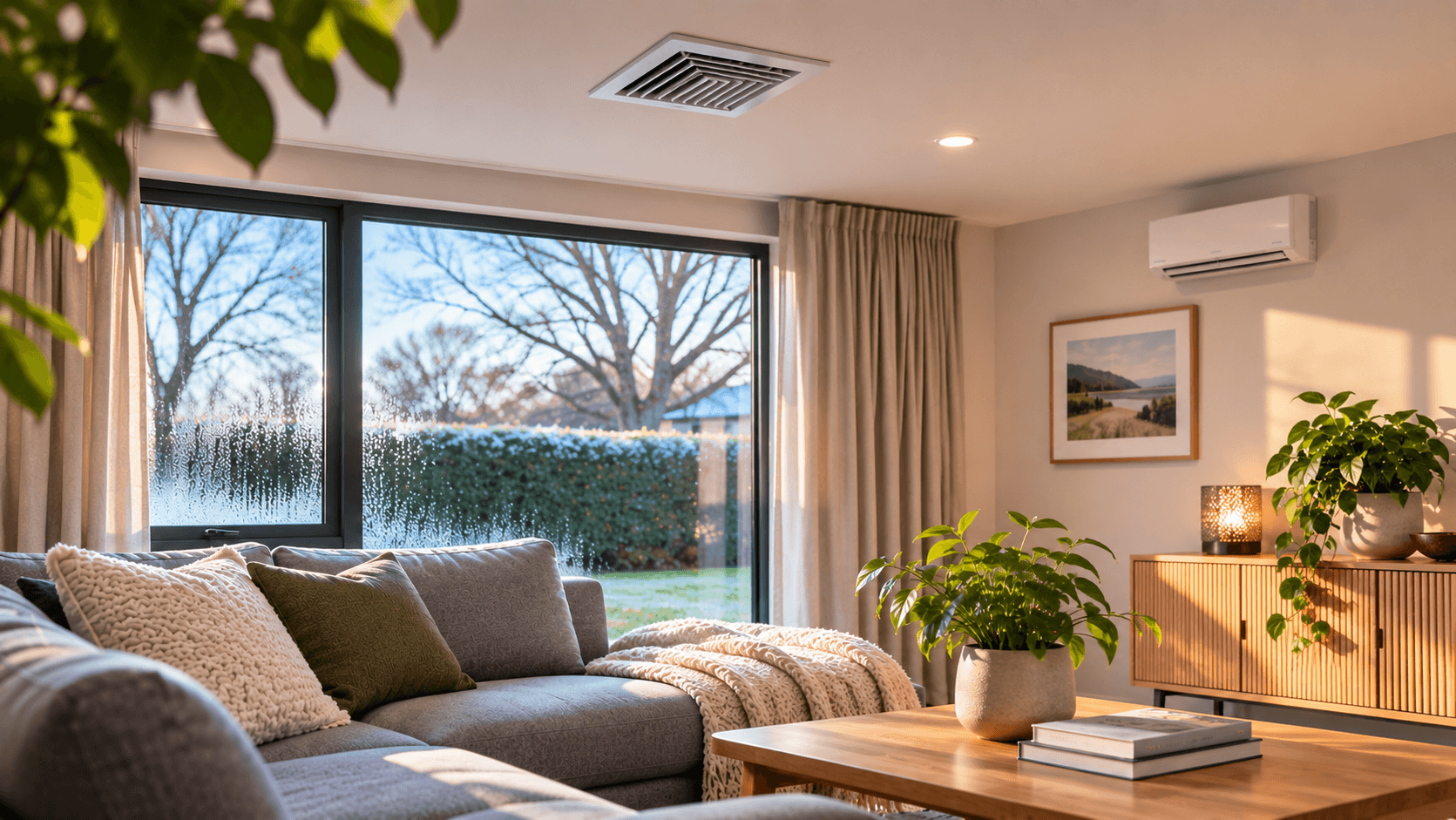
You've noticed condensation collecting on your bedroom windows in the morning. Perhaps there's a musty smell in one of the rooms, or the house feels damp during winter.
You've been looking into home ventilation systems, and you've heard that they can help create a healthier, more comfortable indoor environment.
But there's another question.
If you install ventilation, will it make the house warmer?
It's a reasonable question, particularly when cold rooms and condensation often seem to go together.
The difficulty is that ventilation and heating are sometimes discussed as though they perform the same job.
They don't.
A ventilation system can help manage the air inside your home, but that doesn't necessarily mean it will increase the temperature.
Understanding the difference is important because a house that's cold and damp may need more than one type of improvement.
Ventilation and Heating Are Doing Different Jobs
To understand what ventilation can achieve, it helps to start with the difference between heating a home and ventilating it.
A heating system supplies heat to a room or living space.
For example, a heat pump uses electricity to move heat into your home during winter. It warms the indoor air and circulates that air through the area it's designed to serve.
A ventilation system has a different purpose.
It manages air exchange, bringing outdoor air into the home and removing indoor air, either through mechanical equipment, natural airflow or a combination of approaches.
This exchange helps remove moisture and indoor pollutants that can accumulate when a home is occupied.
Everyday activities such as cooking, showering, drying clothes indoors and even breathing introduce moisture into the indoor environment.
Without adequate ventilation, some of that moisture can remain inside the home.
However, replacing indoor air with outdoor air doesn't automatically make the home warmer.
The temperature of the incoming air matters.
So does the way the ventilation system operates.
That's why two homes with ventilation systems can experience quite different results during winter.
Why Can Ventilation Sometimes Make a House Feel Colder?
Imagine it's a cold winter morning.
The temperature outside is considerably lower than the temperature inside your living room.
Your heat pump has been running, and the lounge is comfortably warm.
Now imagine introducing a continuous supply of outdoor air into that space.
If the incoming air is colder than the indoor air and isn't warmed before entering, it can lower the temperature in the area receiving it.
Your heating system may then need to supply additional heat to maintain the same level of comfort.
This doesn't mean ventilation is a bad idea.
Fresh air is important, and reducing excess indoor moisture can be beneficial.
It simply means that ventilation has a thermal effect that needs to be considered.
Different systems manage this effect in different ways.
Some ventilation systems draw air from the roof space, while others bring outdoor air directly into the home. The temperature of the air available from those sources can change considerably throughout the day and between seasons.
A roof space that becomes warm on a sunny afternoon may be cold during the night.
A system that introduces relatively warm air under one set of conditions may introduce much cooler air under another.
Some systems use temperature sensors and controls to manage when and how air is supplied, but their effectiveness depends on the equipment and settings.
The important point is that ventilation should be assessed according to how it actually operates in your home, rather than assuming that moving more air will automatically improve warmth.
What Is Heat Recovery Ventilation?
Heat recovery ventilation is designed to address one of the challenges of bringing fresh air into a heated home.
In a conventional ventilation arrangement, warm indoor air may be exhausted outside while cooler outdoor air enters to replace it.
That outgoing air contains heat energy that has already been supplied by the home's heating system.
A heat recovery ventilation system uses a heat exchanger to transfer some of that energy between the outgoing and incoming air streams.
During winter, when the indoor air is warmer than the outdoor air, this can help warm the incoming fresh air before it enters the living spaces.
The incoming air may therefore be warmer than it would have been without heat recovery.
But there's an important distinction.
Recovering some existing heat is not the same as generating additional heat.
A heat recovery ventilation system doesn't normally replace the need for a dedicated heating system.
It helps reduce some of the heat that would otherwise be lost through mechanical ventilation.
How much heat is recovered depends on the system's design, installation, airflow, operating conditions and performance.
Heat recovery ventilation can also be useful in summer, depending on the system and the temperature conditions, although it doesn't replace dedicated air conditioning.
The purpose is to manage fresh-air exchange while reducing some of the unwanted transfer of heat between indoors and outdoors.
A Practical Example from Cambridge
Climate Systems is involved in a Cambridge new-build project that illustrates how heating and ventilation can be considered together.
The project combines a Panasonic multi-split heat pump system with Lossnay heat recovery ventilation.
The two systems have different responsibilities.
The Panasonic heat pump system provides heating and cooling, while the Lossnay ventilation system is designed to introduce fresh outdoor air and extract stale indoor air.
Its heat recovery function transfers a portion of the heat energy between those air streams, helping reduce ventilation-related heating and cooling losses.
An important aspect of this project is that the work has been planned during construction.
Refrigerant pipework and ventilation ductwork can be coordinated before the wall and ceiling linings are installed.
That makes it a useful example of considering heating and ventilation as part of the building design, rather than treating them as unrelated additions.
You can read more about the Cambridge new-build heat pump and ventilation project.
The project demonstrates how the systems are being integrated. It isn't a measured comparison of indoor temperatures or energy use before and after installation.
Does Reducing Moisture Make a House Warmer?
This is where the relationship between ventilation and comfort becomes more interesting.
A home can feel unpleasantly cold even when the indoor temperature doesn't appear particularly low.
Excess moisture, cold surfaces, draughts and poor insulation can all contribute to discomfort.
Ventilation can help manage indoor moisture by replacing humid indoor air with outdoor air when conditions are suitable.
In winter, outdoor air may contain less total water vapour than the warm, humid air inside a house, even when the outdoor relative humidity is high.
When that outdoor air enters the home and is warmed, its relative humidity generally decreases.
This can help reduce the accumulation of indoor moisture.
But removing moisture doesn't automatically raise the air temperature.
A bedroom that is 14°C before ventilation won't necessarily become 18°C simply because the air is drier.
The room may still need heating.
There may also be significant heat loss through windows, walls, ceilings or floors.
Ventilation can help address part of the moisture problem, but it doesn't remove the need to consider the building itself.
For example, condensation forms when moisture in the air meets a surface cold enough for water vapour to condense.
Reducing indoor humidity can help, but keeping the glass and surrounding surfaces warmer may also be important.
If condensation is a recurring problem, it's worth understanding both the moisture sources and the temperatures of the affected surfaces.
We explore this in more detail in our article Why Do My Windows Get Condensation in Winter?.
What Happens When Heating and Ventilation Are Designed Together?
Installing ventilation may help manage moisture, but it won't necessarily solve the bedroom heating problem.
Adding another heat pump could improve the bedroom temperature, but it may not adequately address the source of excess moisture.
And improving insulation may help the house retain warmth, while still leaving a need for adequate fresh-air exchange.
If you're considering additional heating, our article Do I Need Another Heat Pump or a Whole-Home Heating Solution? explains why the number of rooms, their layout and how they're used should influence the decision.
This is why it's useful to consider heating, ventilation and the building together.
Each affects the indoor environment in a different way.
A well-considered approach looks at where heat is needed, how fresh air is supplied, where moisture is generated and how the building performs.
That's the thinking behind Climate Systems' Whole Home Comfort solutions, which consider the different factors affecting comfort rather than focusing on one piece of equipment.
That doesn't mean every home needs a complicated system.
Some homes may benefit from relatively straightforward improvements to heating and ventilation.
Others, particularly new builds or substantial renovations, may offer opportunities to coordinate several systems from the beginning.
The Cambridge project is an example of this planning approach, with heating, cooling and heat recovery ventilation being considered during construction.
The goal isn't to install as much equipment as possible.
It's to understand what each system needs to achieve and how those systems will work within the home.
What If Your House Is Already Cold and Damp?
When a home is both cold and damp, it's tempting to look for one product that will solve everything.
But cold temperatures and excess moisture aren't always caused by the same problem.
Imagine a bedroom that regularly has condensation on the windows.
The room is rarely heated, and the door stays closed overnight.
Moisture from the occupants' breathing accumulates, while the window glass becomes cold.
In this situation, ventilation may help remove some of the moisture.
However, if the room remains poorly heated, the glass and other surfaces may still be cold enough for condensation to occur.
Now imagine a different bedroom.
It has adequate heating, but the occupants regularly dry washing indoors and the room has little effective ventilation.
The heating system may maintain a reasonable temperature, but excess moisture can still become a problem.
These two rooms may require different improvements.
In the first, both heating and ventilation deserve attention.
In the second, managing moisture generation and providing adequate ventilation may be more important.
There are also homes where poor insulation, water leaks, rising damp or other building defects contribute to persistent moisture problems.
A ventilation system won't repair those defects.
That's why the cause of the problem matters.
Rather than assuming every damp home needs the same ventilation system, it's worth investigating where the moisture is coming from, how the home is heated and how effectively fresh air is exchanged.
How Do You Know What Your Home Actually Needs?
If you're considering ventilation, start with the problem you're trying to solve.
Is the main concern condensation on the windows?
Does the house smell musty?
Are certain bedrooms consistently cold?
Does the home become uncomfortable during summer?
Or are you building or renovating and want to plan heating, cooling and ventilation together?
These questions lead to different considerations.
A home with excess indoor moisture may benefit from better ventilation, but the type of system needs to suit the building and the conditions.
A home with cold bedrooms may need improved heating distribution or reduced heat loss.
A new build may offer the opportunity to consider heat recovery ventilation alongside a carefully designed heating and cooling system.
It's also important to understand the existing ventilation arrangements.
Kitchen and bathroom extraction, opening windows, natural air leakage and mechanical ventilation all influence how air moves through a house.
The best approach depends on what is already there, what is working and what isn't.
Rather than starting with a particular product, it makes more sense to start with the home.
Common Questions About Home Ventilation and Heating
Does a home ventilation system provide heating?
Most home ventilation systems are primarily designed to exchange air rather than generate heat. Some systems include heating components, and heat recovery ventilation can transfer some warmth from outgoing indoor air to incoming fresh air. However, ventilation alone shouldn't be assumed to replace a dedicated heating system.
Can heat recovery ventilation warm incoming air?
Yes. When indoor air is warmer than outdoor air, a heat recovery ventilation system can transfer some heat from the outgoing air to the incoming fresh air. This can reduce ventilation-related heat loss, but it doesn't normally provide enough additional heat to replace the home's heating system.
Why does my house feel colder when the ventilation is running?
If a ventilation system introduces air that is colder than the indoor air, it can lower room temperatures or create uncomfortable air movement. The effect depends on the ventilation system, its controls, airflow rates and outdoor conditions. The heating system may need to provide additional warmth to maintain comfort.
Will ventilation reduce condensation on windows?
Ventilation can help reduce condensation by removing moisture-laden indoor air and replacing it with air that can lower indoor humidity under suitable conditions. However, condensation also depends on the temperature of the glass and surrounding surfaces. Heating, insulation, glazing and moisture sources may need attention as well.
Do I need a ventilation system if I already have a heat pump?
Possibly. A standard wall-mounted heat pump primarily heats or cools and recirculates indoor air. It doesn't normally provide a dedicated supply of fresh outdoor air. Whether additional ventilation is needed depends on the home's existing ventilation, moisture levels, occupancy and indoor air quality requirements.
Final Thoughts
A home ventilation system can make an important contribution to a more comfortable indoor environment.
But it doesn't necessarily make the house warmer.
Ventilation manages air exchange and can help control excess indoor moisture. Heat recovery ventilation can reduce some of the heat lost when fresh outdoor air is introduced.
Heating systems provide the warmth needed to maintain comfortable room temperatures.
And the building itself influences how effectively that warmth is retained.
These are different parts of the same picture.
If your home is cold, damp or uncomfortable, the most useful starting point isn't deciding which ventilation system to buy.
It's understanding what's causing the problem.
The right solution isn't necessarily more heating or more ventilation. It's the right combination for your home.
Looking for a More Comfortable, Healthier Home?
Climate Systems helps Waikato homeowners understand how heating, cooling and ventilation can work together.
Whether you're dealing with condensation, uncomfortable rooms or planning a new home, we can help assess the building and identify practical options.
Explore our Home Ventilation Solutions or talk to Climate Systems about what you'd like to improve.