Published 19 October 2026
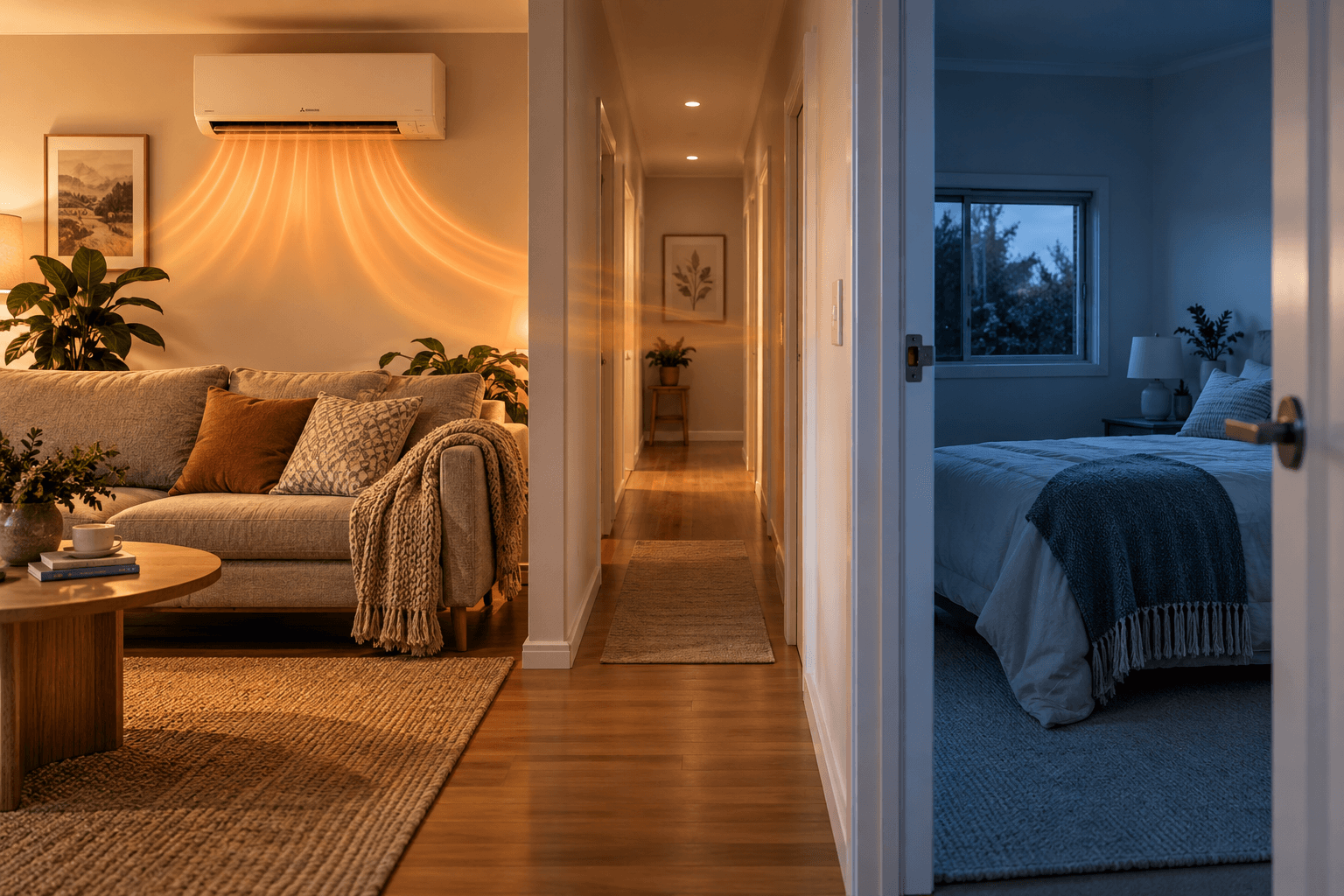
Your lounge is warm. The heat pump is doing its job, and the living area feels comfortable.
But walk down the hallway and the bedrooms tell a different story.
Perhaps you've started thinking about installing another heat pump. One at the other end of the house might solve the problem.
Then another question comes to mind.
Would it make more sense to look at heating the whole house instead?
It's a question worth exploring before investing in more equipment, because the best approach isn't necessarily the one that adds the most heating capacity.
It's the one that gets comfortable conditions to the rooms where you actually need them.
The First Question Isn't Which Heating System to Buy
When part of a house feels cold, it's natural to start thinking about equipment.
Would a larger heat pump help? Could another unit warm the bedrooms? Would ducted heating be better?
But before comparing systems, it helps to understand what isn't working in the home.
There is a difference between a room that doesn't have enough heating and a room that isn't receiving enough warmth from an existing system.
A heat pump in the lounge might be perfectly adequate for that space. The problem may be that the bedrooms are separated by walls, hallways and doors that restrict the movement of warm air.
In that situation, replacing the lounge heat pump with a more powerful model may not solve the problem.
You could end up producing more heat in a room that's already comfortable, while the bedrooms remain cold.
It's also worth thinking about when the rooms need to be comfortable.
The lounge might need heating during the evening, while the bedrooms are mainly used overnight and early in the morning. A home office may need warmth throughout the working day.
Those differences matter because they influence whether the rooms would benefit from independent heating or a system designed to serve several areas.
Before choosing equipment, it's worth establishing which rooms need heating, when they need it and whether cooling is also important.
When Does Another Heat Pump Make Sense?
A second heat pump can be a sensible solution when two separate areas of a home have different heating and cooling requirements.
Imagine a house with an open-plan lounge, dining room and kitchen at one end, and a separate family room at the other.
The existing heat pump works well in the main living area, but it has little effect on the family room.
Installing another appropriately sized heat pump in that second space may provide a straightforward way to make both areas comfortable.
Each unit can be operated independently, allowing the household to heat or cool the spaces being used.
That independence can be particularly useful when rooms are occupied at different times.
For example, a home office might need heating during the day while the lounge remains unoccupied. Later, the household may want to heat the lounge without running the office unit.
A second heat pump can also make sense when the layout of the house makes it difficult to distribute conditioned air from one location.
However, the placement of that additional unit matters.
Installing a heat pump in a hallway and hoping it will warm several bedrooms is not necessarily the same as providing effective heating to those rooms.
The layout, airflow and bedroom doors will still influence the result.
The important question is whether the proposed heat pump can effectively serve the area it's being installed to heat.
What Changes When Several Rooms Need Heating?
Now consider a different situation.
Instead of one additional family room, you have three bedrooms that remain cold in winter.
You want them comfortable at night and in the morning, and you would also like effective cooling during summer.
This changes the nature of the problem.
You're no longer trying to heat one additional open space. You're trying to deliver comfortable conditions to several separate rooms.
Each bedroom has its own heat losses, windows, doors and heating requirements.
A heat pump installed at one end of a hallway may not be able to distribute sufficient warmth into every room, particularly when the doors are closed.
In this situation, it becomes worth considering how the heating and cooling system could serve the rooms more directly.
That doesn't automatically mean ducted heating is required.
It means the home may benefit from a broader look at how conditioned air is delivered, rather than simply adding another heat pump wherever there is available wall space.
The distinction is important.
Heating another area and designing heating for several separate rooms are not always the same job.
When Is Ducted Heating Worth Considering?
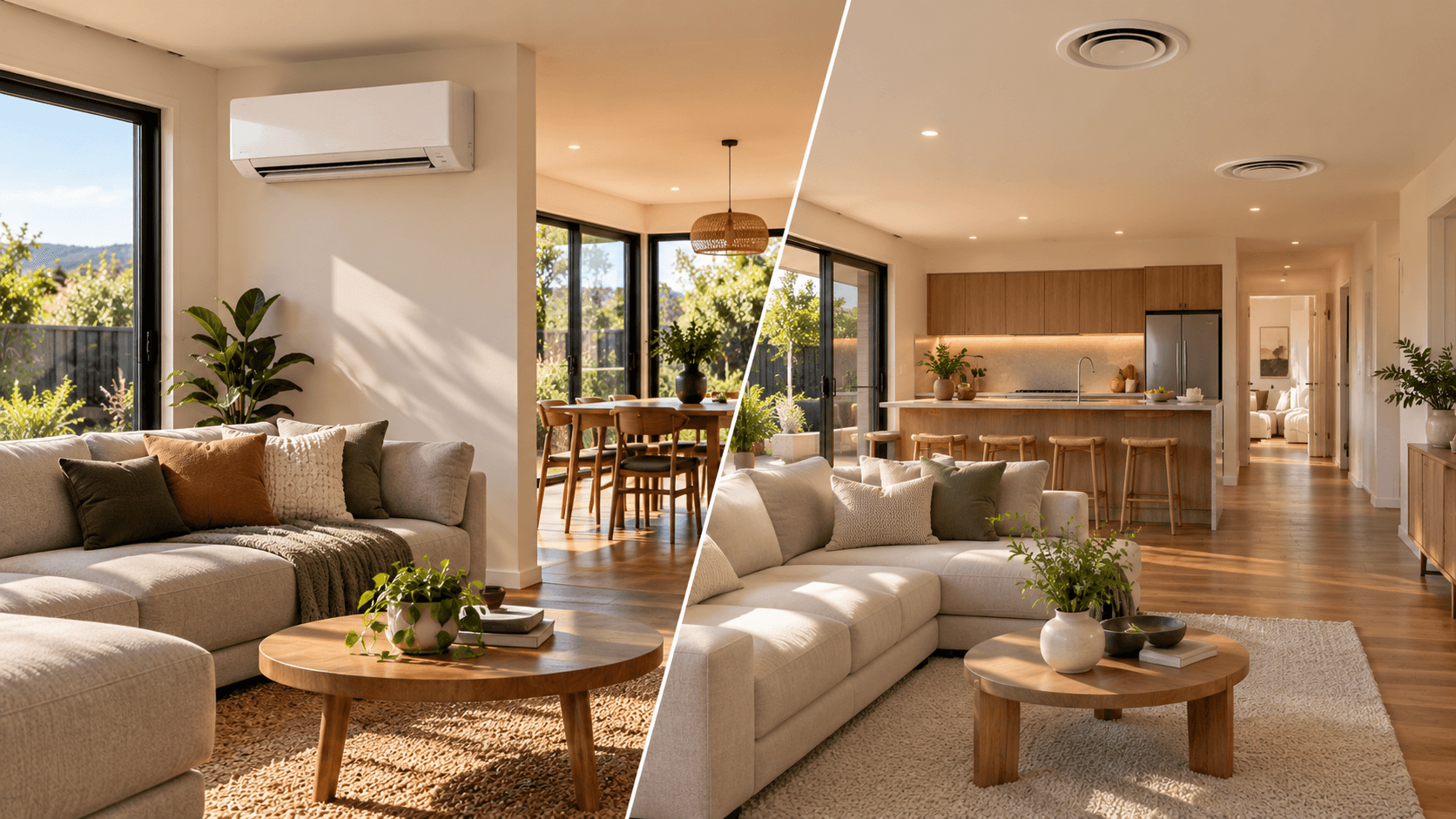
Ducted heat pump systems provide another way to distribute heating and cooling through a home.
Rather than using a wall-mounted indoor unit to circulate conditioned air through one main space, a ducted system uses a central indoor unit connected to ductwork.
Conditioned air is delivered through outlets positioned in the rooms the system is designed to serve.
This can make ducted heating worth considering when several bedrooms and living areas need heating and cooling.
Because air is delivered more directly to those rooms, the system doesn't rely on warmth travelling from the lounge, through the hallway and around corners.
However, ducted heating isn't automatically the best solution for every home.
The building needs suitable space for the equipment and ductwork. Roof construction, ceiling space, access and the arrangement of rooms can all affect installation practicality.
System design also matters.
A ducted system serving several rooms doesn't necessarily allow every room to be controlled independently. That depends on the controls, zoning arrangements and system design.
In some homes, ducted heating may provide a practical way to serve several rooms from one system.
In others, individual heat pumps may be simpler, more flexible or better suited to the layout.
The decision needs to reflect the house, not just the appeal of having a central system.
Could a Multi-Split Heat Pump System Be Another Option?
When considering multiple heat pumps, it's useful to understand that several indoor units don't always require several outdoor units.
A multi-split system connects multiple indoor units to a compatible outdoor unit.
This can allow different rooms or areas to have their own indoor units, with temperature settings and operation determined by the particular system's capabilities.
For example, a homeowner might want an indoor unit in the main living area and additional units serving separate bedrooms.
A multi-split configuration may be worth investigating, particularly where the number or positioning of outdoor units is a consideration.
However, it isn't simply a case of connecting additional indoor units to any existing heat pump.
The equipment must be compatible, and the overall system needs to be designed for the required heating and cooling loads.
There can also be operating limitations depending on the equipment selected.
Multi-split systems are therefore another option to assess, rather than an automatic replacement for individual heat pumps or ducted heating.
Where Does Heat Transfer Fit?
Heat transfer systems are sometimes considered when one part of the home is already warm and other rooms remain cold.
But heat transfer works differently from a heat pump.
A heat pump actively provides heating or cooling to the area it serves.
A heat transfer system moves some of the warm air already available in one part of the home to another.
For example, if a living room has a suitable source of warmth, a heat transfer system may help move some of that air towards colder bedrooms.
This can be useful in the right circumstances, but there are important limitations.
Heat transfer doesn't create additional heat.
If there isn't enough useful warmth available in the source room, there may be little benefit in moving that air elsewhere.
Transferring warmth also affects the room it's being taken from, and the existing heating system may need to replace some of that heat.
Heat transfer is generally a heating-focused approach rather than a substitute for dedicated bedroom cooling.
It also shouldn't be confused with a home ventilation system, which is intended to manage air exchange and indoor air conditions.
Whether heat transfer is worthwhile depends on the heat source, the layout of the home and the level of comfort you're trying to achieve.
What About the Home Itself?
Before adding more heating equipment, it's worth considering how effectively the house retains warmth.
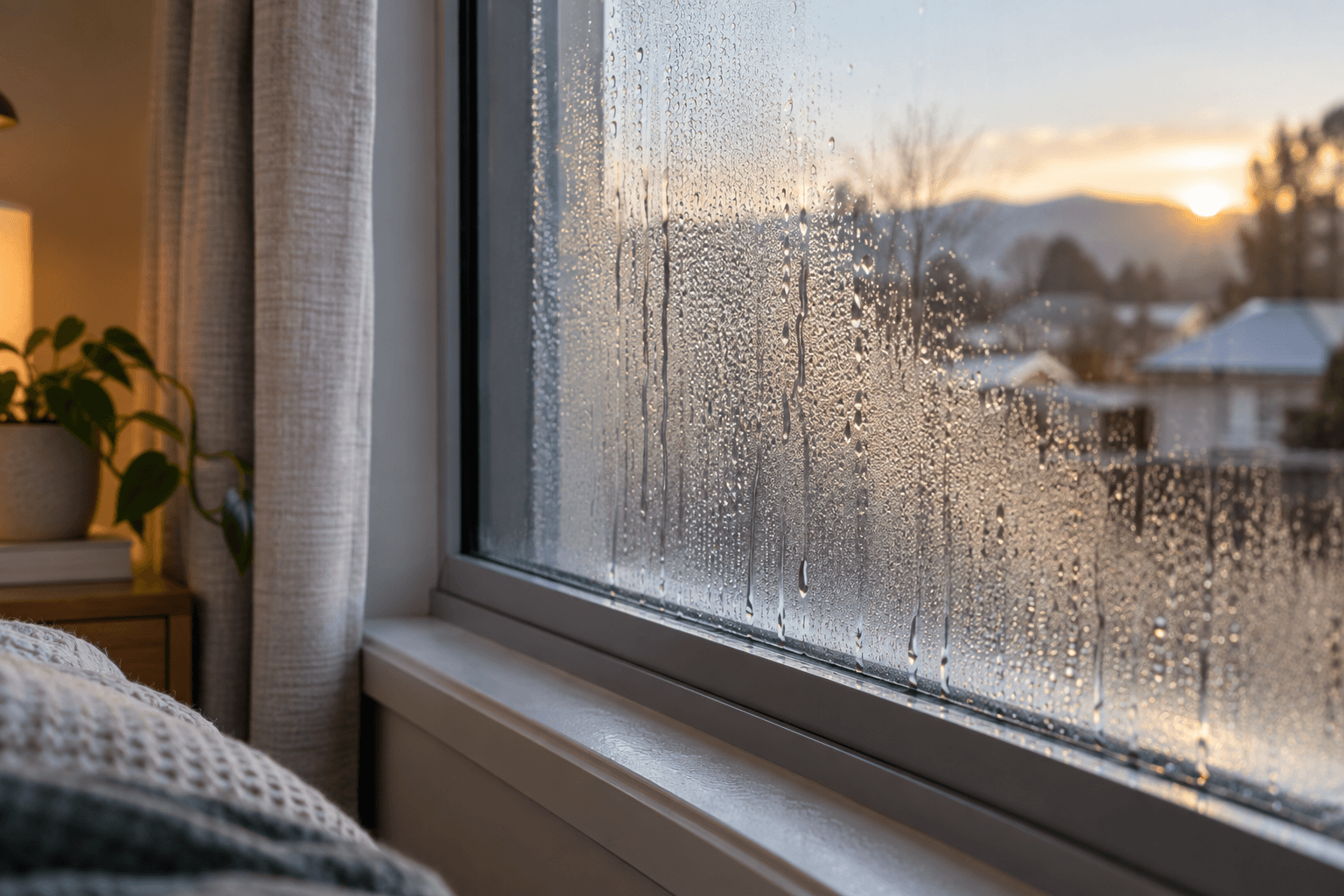
A bedroom can feel cold for two different reasons.
It may not be receiving enough heat, or it may be losing heat faster than the heating available can replace it.
Often, both factors are involved.
Insulation, glazing, draughts and construction all affect how quickly rooms lose warmth during winter.
Consider two bedrooms receiving similar amounts of heating.
One has good ceiling and underfloor insulation, relatively effective glazing and limited unwanted draughts.
The other has poor insulation, older windows and noticeable air leakage.
Even with similar heating input, the rooms may feel very different.
This doesn't mean homeowners must upgrade every part of the building before considering additional heating.
It means the condition of the home should be part of the decision.
Sometimes improvements to insulation or draught control can reduce the heating needed to maintain comfort.
In other cases, the house may still need a better way of delivering heat to separate rooms.
Looking at the building and the heating system together provides a more useful picture than considering either in isolation.
Should You Keep Your Existing Heat Pump?
If you already have a heat pump that works well in the lounge, replacing it may not be necessary.
The existing unit could continue serving the living area while another system addresses the rooms that aren't comfortable.
For some homes, that might mean installing a second individual heat pump.
For others, it could involve a broader heating arrangement that works alongside the existing equipment.
However, if you're considering ducted heating or a multi-split system, it's worth assessing how the existing heat pump fits into the overall design.
Its age, condition, capacity, placement and compatibility with the proposed approach may all influence the decision.
The aim shouldn't be to replace working equipment simply because a different system is being considered.
Equally, keeping an existing unit isn't automatically the best choice if it results in an unnecessarily complicated or poorly matched arrangement.
The important thing is to assess what the current system does well and where the remaining comfort problems exist.
How Do You Decide Which Approach Is Right?
Imagine two houses with similar floor areas.
In the first, a heat pump comfortably serves the open-plan living area. The main problem is a separate family room that needs heating and cooling at different times.
Another individual heat pump could be a very practical option.
In the second house, the lounge is comfortable but three bedrooms are consistently cold. The homeowners want those rooms heated in winter and cooled in summer, even when the doors are closed.
That household may benefit from investigating a system that delivers conditioned air directly to several rooms.
Depending on the house, that could involve ducted heating and cooling, multiple indoor units or another suitable arrangement.
Now imagine a third home where the bedrooms are cold, but the insulation is poor and draughts are significant.
The heating solution still matters, but improving the building's ability to retain warmth may also be an important part of achieving better comfort.
These homes don't necessarily need the same equipment, even though the homeowners may describe the problem in almost identical terms.
That's why a useful assessment starts with the rooms, their heating and cooling requirements, the building itself and the existing equipment.
Only then does it make sense to compare the available systems.
Common Questions About Adding Another Heat Pump
Is it worth installing a second heat pump?
A second heat pump can be worthwhile when another room or area needs its own heating and cooling. It can provide independent temperature control without replacing a working heat pump elsewhere in the house. Whether it's the best option depends on the layout, room size, installation practicality and the number of spaces that need conditioning.
Is ducted heating better than having two heat pumps?
Neither approach is automatically better. Two individual heat pumps may suit separate areas with independent heating and cooling needs. Ducted heating may be worth considering when several rooms need conditioned air delivered directly through a central system. Installation feasibility, zoning, controls and the home's layout all influence the choice.
Can I heat several bedrooms with one additional heat pump?
One additional wall-mounted heat pump may provide some warmth to connected rooms, but it won't necessarily heat several separate bedrooms comfortably. Hallways, walls and closed doors can restrict airflow. If reliable heating in each bedroom is important, the system should be designed around those rooms rather than assuming warmth will spread from one unit.
Is heat transfer cheaper than installing another heat pump?
Heat transfer and heat pumps perform different functions, so their costs shouldn't be compared without considering what each system can achieve. Heat transfer moves existing warmth, while a heat pump actively provides heating and cooling. Installation costs, operating requirements, available heat and the level of comfort needed all affect the comparison.
Can I keep my existing heat pump if I install a whole-home system?
Often, yes. An existing heat pump may continue serving one part of the home while another system provides comfort elsewhere. Whether keeping it makes sense depends on its condition, capacity, placement and how it fits into the proposed heating and cooling arrangement.
What is the best way to heat several rooms in an existing house?
The best approach depends on the layout, insulation, glazing, room separation and how each room is used. Multiple individual heat pumps, multi-split systems and ducted heating are possible options. Heat transfer may also be useful where suitable warmth is already available. A home assessment can help establish which arrangement is practical.
Final Thoughts
Installing another heat pump might be exactly what your home needs.
If there's one additional area that requires heating and cooling, a second unit can be a straightforward and effective solution.
But when several rooms are uncomfortable, it's worth looking at the bigger picture.
The layout of the home, how the rooms are used, how well the building retains warmth and what the existing heating system can achieve all influence the decision.
A larger system isn't necessarily better. Neither is installing more equipment than the house needs.
The right solution is the one that delivers comfortable conditions to the rooms you actually use.
And finding that solution starts with understanding the home, not choosing a product.
Looking for a Better Way to Heat and Cool Your Home?
Climate Systems helps homeowners understand why some rooms are comfortable while others aren't, and what can be done about it.
We look at the home's layout, existing heating, insulation and how different spaces are used before recommending an approach.
Whether that involves another heat pump, ducted heating and cooling, heat transfer or a combination of solutions, the goal is to find what makes sense for your home.
Explore our Whole Home Comfort solutions or talk to Climate Systems about what you're trying to achieve.