How Often Should You Service Your Heat Pump?
Your heat pump works hard to keep your home warm through the Waikato winter and comfortably cool during summer. But when was the last time you gave it any attention beyond changing the temperature on the remote?
It's easy to forget about maintaining your heat pump when everything appears to be working. However, dust, dirt and everyday use can gradually affect its performance without you noticing.
Regular maintenance can help your heat pump operate efficiently, deliver consistent comfort and remain reliable for longer. The important thing is understanding what you can do yourself, when professional servicing is worthwhile and when your system might need more than a clean.
Article Summary
- Annual professional servicing is a sensible starting point for most residential heat pumps, subject to manufacturer recommendations.
- Air filters should be checked and cleaned regularly throughout the year.
- Heat pumps that operate frequently or are exposed to dust, pet hair or harsh outdoor conditions may require more frequent attention.
- Spring and autumn are particularly good times to prepare your heat pump for the coming season.
- Poor airflow, unusual noises, unpleasant smells and indoor water leaks can indicate that your heat pump needs professional attention.
- Servicing can help restore lost performance, but it cannot correct every home heating or cooling problem.
How Often Should a Heat Pump Be Professionally Serviced?
For most residential heat pumps, arranging a professional service every 12 months is a good preventative maintenance approach.
New Zealand's Energy Efficiency and Conservation Authority (EECA) recommends regular homeowner maintenance alongside an annual servicing arrangement. Several heat pump manufacturers also recommend annual professional servicing.
However, not every heat pump operates under the same conditions.
A heat pump in a busy family home that runs throughout summer and winter will have different maintenance requirements from one installed in a spare bedroom and used only occasionally.
You may need more frequent maintenance if:
- Your heat pump operates for several hours most days.
- You use your heat pump for both heating and cooling.
- You have indoor pets.
- Your property is exposed to significant dust or airborne debris.
- Your outdoor unit is located in a corrosive or particularly exposed environment.
- Your system is showing signs of reduced performance.
Your manufacturer's instructions, warranty requirements and the condition of your system should guide your maintenance schedule.
The goal isn't simply to service your heat pump according to the calendar. It's to give your particular system the attention it needs to continue delivering reliable home comfort.
Is Cleaning Your Heat Pump Filters Enough?
Cleaning the filters is one of the most useful things you can do yourself.
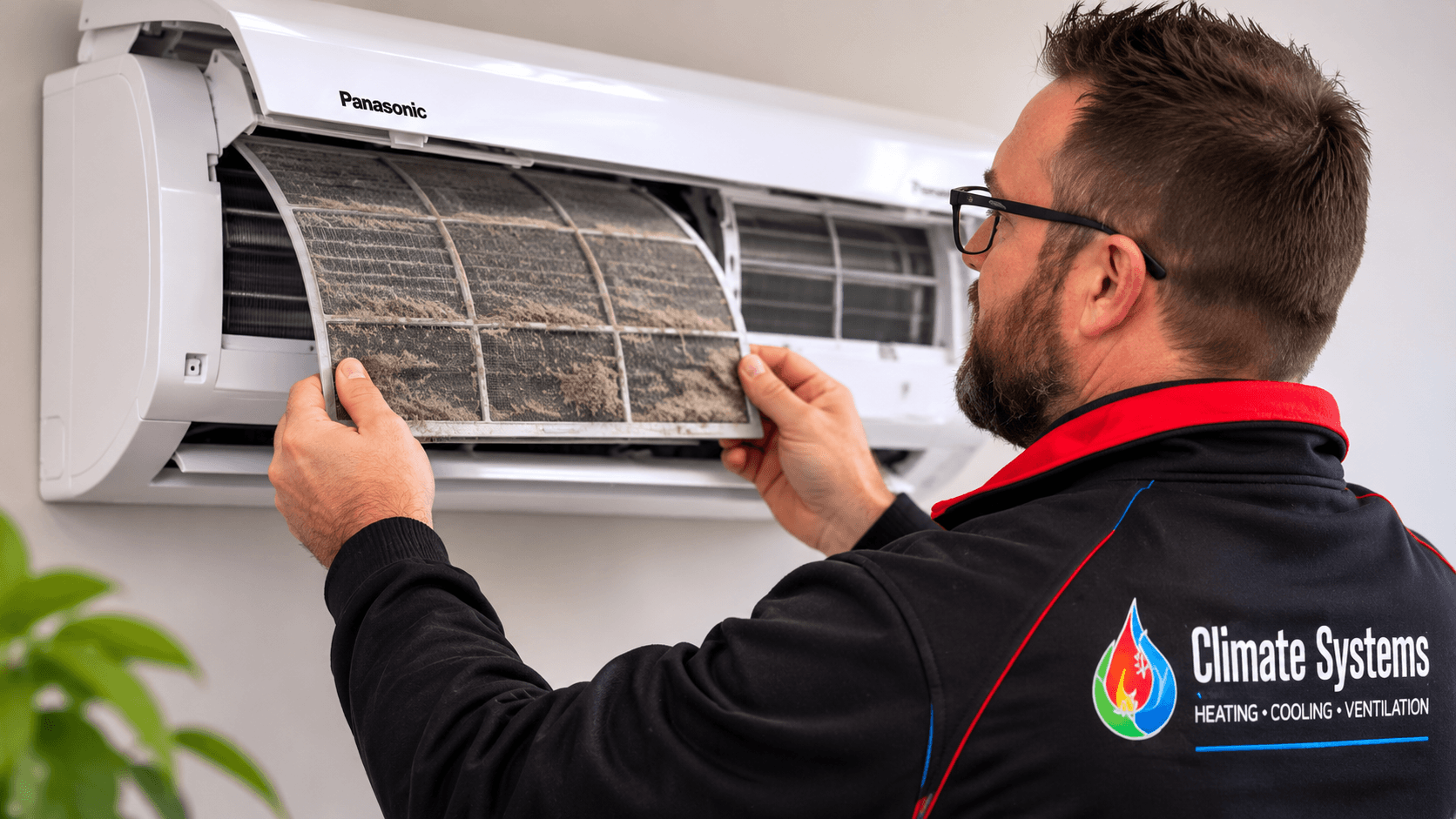
Your indoor heat pump draws air from the room through filters before passing it across a heat exchanger. Over time, household dust, pet hair and other airborne particles collect on these filters, restricting airflow.
When airflow is restricted, your heat pump may struggle to deliver the level of heating or cooling you expect.
The good news is that filter cleaning is relatively straightforward on most wall-mounted residential heat pumps.
How to Clean Your Heat Pump Filters
Always follow the instructions for your particular heat pump model.
For many wall-mounted systems, the process involves:
- Turning the heat pump off and following the manufacturer's power isolation instructions.
- Opening the front cover, provided it can be reached safely.
- Carefully removing the accessible air filters.
- Removing accumulated dust using the recommended cleaning method.
- Allowing washable filters to dry completely before reinstalling them.
- Refitting the filters and closing the cover.
Many manufacturers recommend checking filters at least every few months, although frequently used systems may need monthly attention.
If you have pets that shed throughout the year, checking your filters more regularly is particularly worthwhile.
However, clean filters do not necessarily mean the entire heat pump is clean.
Dirt can accumulate on internal components, including the heat exchanger and fan assembly, where ordinary homeowner cleaning cannot easily reach.
That's where professional servicing becomes valuable.
What Happens During a Professional Heat Pump Service?
A professional heat pump service goes beyond removing dust from accessible filters.
It provides an opportunity to inspect the condition of the system, assess its operation and identify potential problems before they develop into more significant faults.
Depending on the type of heat pump and its condition, professional servicing may include the following.
Inspecting and Cleaning the Indoor Unit
A technician can assess the condition of internal components, including the heat exchanger and fan assembly, and determine whether additional cleaning is required.
Removing accumulated dirt from these areas can help restore airflow and improve the system's ability to transfer heat.
If significant contamination is present, a deeper clean may be required rather than a standard maintenance service.
Checking the Outdoor Unit
Your outdoor unit is just as important as the unit inside your home.
It transfers heat between your home and the outdoor environment. Leaves, dirt, vegetation, corrosion and other environmental factors can affect its operation.
A technician can inspect its condition, identify airflow restrictions and assess whether cleaning or further attention is needed.
Inspecting the Condensate Drainage System
When your heat pump operates in cooling mode, moisture can condense on the indoor heat exchanger.
This water is collected and directed away through a drainage system.
If the drainage becomes restricted, water may leak from the indoor unit rather than draining outside as intended.
Checking the drainage system is particularly relevant when preparing your heat pump for summer.
Assessing System Operation
A professional service can include operational checks to help determine whether your heat pump is performing as expected.
Unusual noises, inconsistent temperatures, weak airflow or other irregularities may indicate that further investigation is required.
The exact scope of servicing depends on the system and any issues identified.
You can learn more about the original installation and commissioning process in our guide to what happens during a professional heat pump installation.
Good installation and appropriate ongoing maintenance both contribute to reliable long-term performance.
Does Heat Pump Servicing Improve Energy Efficiency?
It can, particularly when accumulated dirt or restricted airflow is affecting your system.
Heat pumps rely on moving air across heat exchangers to transfer heat. When filters, fans or coils become dirty, that process can become less effective.
Your system may take longer to reach the desired temperature or struggle to maintain comfortable conditions.
Appropriate cleaning and maintenance can help address these issues.
However, servicing does not automatically make every heat pump cheaper to run.
If your system is already clean and operating correctly, you may not notice a significant change in electricity consumption after servicing.
Your household energy use also depends on factors such as insulation, outdoor temperatures, thermostat settings and the size of your heat pump relative to the area it serves.
If your heat pump has always struggled to heat or cool a particular room, rather than gradually losing performance, system sizing may be part of the problem.
Our guide to choosing the right size heat pump for your home explains why matching the system to the space is so important.
Should You Service Your Heat Pump Before Summer or Winter?
Both seasons provide a good opportunity to check that your heat pump is ready for what lies ahead.
Preparing Your Heat Pump for Summer
Waikato summers can bring hot, humid conditions that make it difficult to keep your home comfortable, particularly during the afternoon and evening.
If you rely on your heat pump for air conditioning, spring and early summer are ideal times to check its condition.
Cleaning the filters, checking airflow and ensuring the outdoor unit has sufficient ventilation are useful starting points.
Professional servicing can also identify drainage problems that may become apparent once the system begins operating regularly in cooling mode.
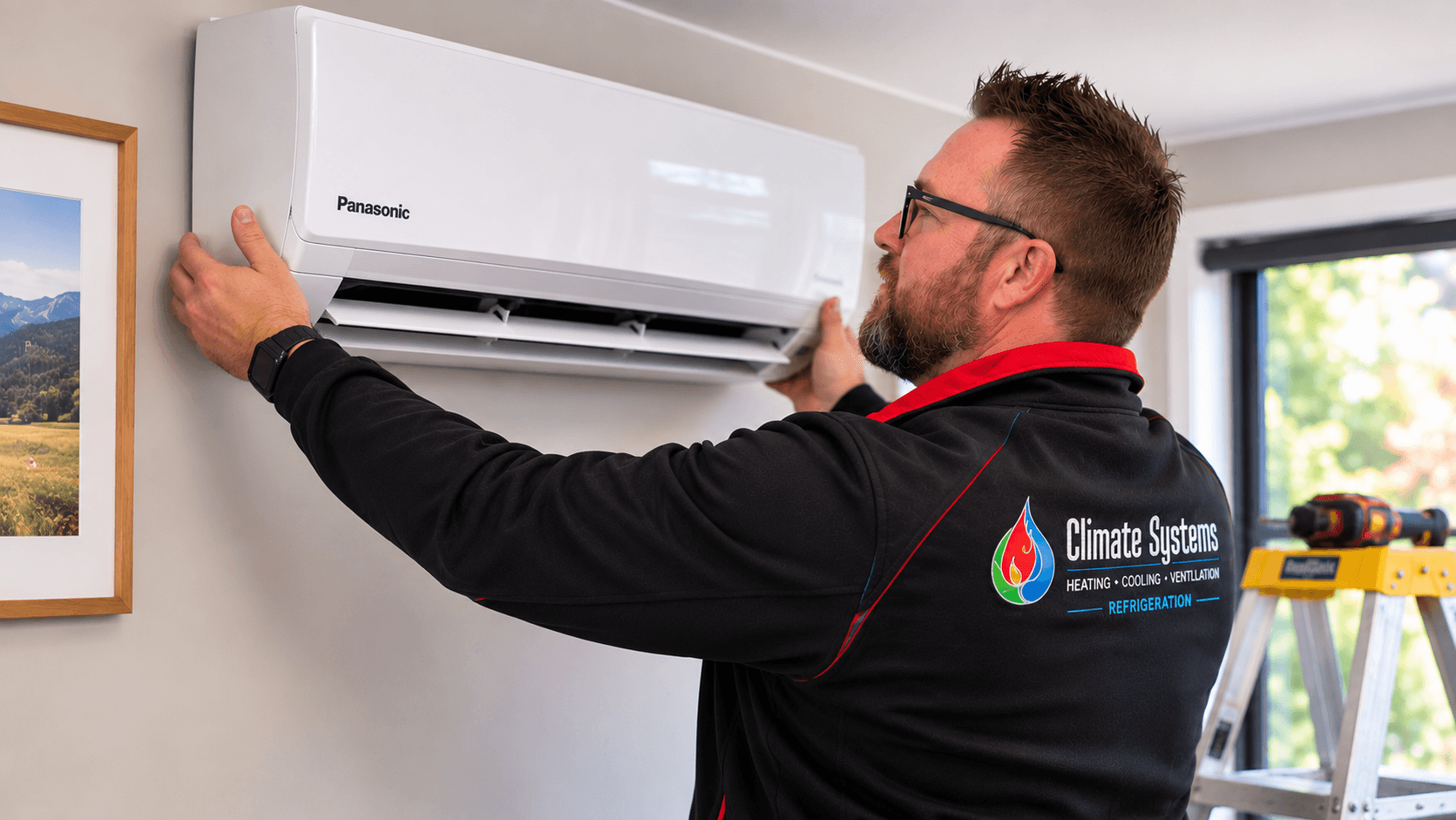
Modern residential installations, such as this heat pump installation in Hamilton, provide both heating and cooling throughout the year.
Maintaining your system for both functions helps you get more from your investment.
Preparing Your Heat Pump for Winter
Autumn is another natural time to arrange maintenance.
As temperatures drop, your heat pump may begin operating for longer periods and become your primary source of household heating.
Identifying problems before the colder weather arrives can reduce the likelihood of discovering an issue when you need your heating most.
You don't necessarily need two professional services every year. Choose a schedule that reflects how you use your system, and maintain the filters between services.
Seven Signs Your Heat Pump May Need Servicing
You don't always need to wait until your next scheduled service.
Changes in how your heat pump operates can provide useful clues that something needs attention.
1. Reduced Airflow
If the air coming from your heat pump feels weaker than usual, dirty filters or internal components may be restricting airflow.
Start by checking the filters. If the problem continues, further investigation may be needed.
2. Your Home Takes Longer to Heat or Cool
A noticeable decline in performance under similar conditions may indicate that maintenance or fault diagnosis is required.
3. Unpleasant or Musty Smells
Persistent unpleasant smells can sometimes be associated with moisture, contamination or accumulated dirt inside the indoor unit.
A deeper professional clean may be necessary to address the underlying cause.
4. Unusual Noises
Rattling, grinding or other unfamiliar sounds should not be ignored.
Some noises are part of normal heat pump operation, but a significant change in sound can indicate a developing problem.
5. Water Leaking From the Indoor Unit
Water dripping inside your home is not normal heat pump operation.
It may indicate a drainage restriction or another issue that requires attention.
Turn the system off and arrange an inspection.
6. Unexpectedly High Electricity Consumption
If your electricity usage increases without an obvious change in weather, settings or household habits, reduced heat pump efficiency is one possible explanation.
However, increased electricity consumption alone is not enough to diagnose a heat pump fault.
7. Frequent Error Codes or Unexpected Shutdowns
If your heat pump repeatedly displays an error code or stops operating unexpectedly, professional fault diagnosis may be more appropriate than routine servicing.
If you notice burning smells, smoke or electrical concerns, stop using the system and seek qualified assistance.
Does an Older Heat Pump Need More Frequent Servicing?
Not necessarily.
A well-maintained older heat pump may continue to provide reliable heating and cooling for years.
Rather than focusing solely on age, consider how your system performs, its overall condition and whether it has developed recurring problems.
An older heat pump that continues to meet your household's needs may benefit from ongoing maintenance. A system that frequently breaks down, requires expensive repairs or struggles to maintain comfortable temperatures may warrant a different approach.
A professional assessment can help you understand whether servicing, repairing or replacing the system represents better value.
Regular care is worthwhile from the beginning, too.
For example, the residential system featured in our Panasonic heat pump installation project in Te Awamutu was selected and installed for the home's requirements. Maintaining a correctly selected system helps protect that initial investment.
Does Your Heat Pump Need Servicing, or Is Something Else Wrong?
This is an important distinction.
Not every home comfort problem can be solved by servicing your heat pump.
If your lounge is comfortable but your bedrooms remain too cold in winter or too hot in summer, the issue may relate to how heating and cooling are distributed throughout your home.
Similarly, poor insulation, excessive heat gain, draughts or an incorrectly sized system can affect comfort even when your heat pump is operating correctly.
We explore these challenges in our article Can One Heat Pump Heat a Whole House?.
At Climate Systems, we believe in understanding the problem before recommending a solution.
Sometimes that means servicing your existing heat pump. Other times, it means looking more closely at the way your home manages heating, cooling, airflow and moisture.
The right solution starts with understanding what your home actually needs.
Frequently Asked Questions About Heat Pump Servicing
Do heat pumps need servicing every year?
Annual professional servicing is a sensible preventative maintenance schedule for many residential systems and is recommended by several manufacturers. The appropriate frequency depends on usage, environmental conditions, manufacturer instructions and warranty requirements.
Can I service my heat pump myself?
You can carry out routine homeowner maintenance, including cleaning accessible filters and keeping the outdoor unit clear of vegetation and debris. Internal cleaning, electrical work, refrigerant-related work and fault diagnosis should be left to appropriately qualified technicians.
Does my heat pump need to be regassed every year?
No. A heat pump's refrigerant circulates within a sealed system and is not normally consumed during operation. If refrigerant levels are low, a technician should investigate the cause rather than simply adding more refrigerant as part of routine servicing.
How often should I clean my heat pump filters?
Check your manufacturer's instructions. Every few months is a useful general starting point, with more frequent checks during periods of heavy use or in homes with pets and significant dust.
Is professional servicing worth it if my heat pump is working properly?
Preventative servicing can help identify developing problems, maintain cleanliness and provide reassurance about your system's condition. However, the appropriate frequency and scope depend on the individual system and the manufacturer's recommendations.
Is water coming from my outdoor heat pump normal?
Yes, water around the outdoor unit can be normal, particularly during heating operation and defrost cycles. Water leaking from the indoor unit is different and should be investigated.
Can servicing fix a heat pump that isn't heating or cooling properly?
Servicing may help if the problem relates to dirt or restricted airflow. Mechanical faults, refrigerant leaks, electrical problems or incorrect system sizing may require additional diagnosis and work.
Final Thoughts
Your heat pump is an investment in year-round home comfort.
Regular filter cleaning, keeping the outdoor unit clear and arranging appropriate professional maintenance can help protect that investment.
The most important thing is understanding the difference between routine maintenance and a problem that requires professional attention.
If your heat pump is no longer performing as expected, you don't have to guess whether it needs a clean, a repair or a replacement.
Start by finding out what's actually happening.
Need Your Heat Pump Serviced in Waikato?
Whether you're preparing for summer, getting ready for winter or concerned that your heat pump isn't performing as well as it used to, Climate Systems can help.
Based in Te Awamutu, we provide professional heat pump servicing throughout Waikato, helping homeowners maintain comfortable, efficient homes throughout the year.
Get the right advice for your existing system and understand what it needs before spending money on unnecessary work.
Book your heat pump service today.