What Happens During a Professional Heat Pump Installation?
Article Summary
Thinking about getting a heat pump installed but not sure what the process involves? A professional installation starts well before the unit goes on the wall. From choosing the right system and finding the best position to installing pipework, testing and commissioning, every stage contributes to how well your heat pump performs.
Here's what Waikato homeowners can expect when having a heat pump installed, and why getting the details right matters.
A Good Heat Pump Installation Starts Before Installation Day
If you've decided to install a heat pump, you might imagine the process is fairly straightforward. Someone arrives, mounts a unit on the wall, connects it to an outdoor unit and switches it on.
That's certainly part of the job, but there's considerably more involved in getting a good result.
A heat pump needs to be suitable for the space it's heating and cooling. It also needs to be positioned correctly, installed safely and tested before it's handed over.
Those decisions can make a noticeable difference to how comfortable your home feels, how effectively the system operates and whether it meets your expectations.
At Climate Systems, we believe the best starting point isn't choosing a particular heat pump. It's understanding the home and what the homeowner wants to achieve.
Step 1: Assessing Your Home and Choosing the Right Heat Pump
Before recommending a system, a good installer needs to understand the space.
Two living rooms might have exactly the same floor area but very different heating requirements. One could be well insulated, with double glazing and plenty of afternoon sun. The other might have a high ceiling, older windows and several exterior walls.
Even though the rooms are the same size, they won't necessarily need the same heating capacity.
An assessment should consider the room's dimensions, insulation, glazing, orientation, layout and how the space is used. It should also identify whether you're trying to heat one room or improve comfort across several parts of the house.
For example, in a Panasonic heat pump installation in Te Awamutu, Climate Systems documented assessing the room and installation requirements before selecting a system suited to the space.
That initial assessment matters because a heat pump that's too small may struggle to maintain the desired temperature. Choosing a much larger system isn't automatically better either.
We've explored this in more detail in our article, What Size Heat Pump Do I Need for My Home?.
The aim is to choose equipment that matches the home's actual heating and cooling requirements, rather than relying on a rough estimate or assuming that bigger must be better.
Step 2: Finding the Best Position for the Indoor and Outdoor Units
Once the system has been selected, the next question is where it should go.
Positioning the indoor unit
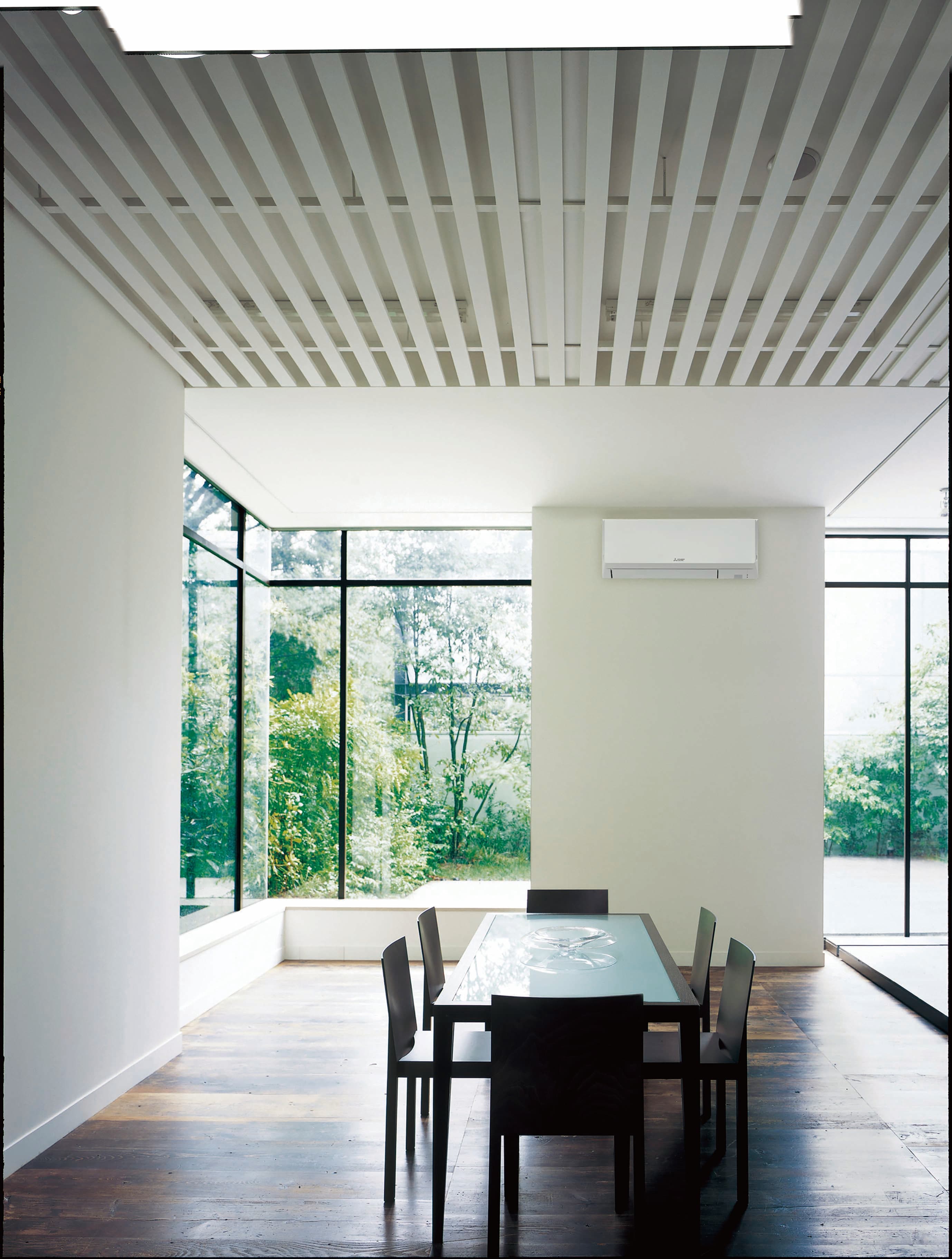
The indoor unit needs to distribute conditioned air effectively throughout the area it's intended to serve.
That doesn't necessarily mean putting it in the middle of the longest wall or wherever there's an available power supply.
The installer needs to consider the shape of the room, furniture placement, doors, windows and where people normally sit or sleep.
A heat pump positioned directly above a favourite chair might be convenient to install, but uncomfortable if it blows air straight onto someone whenever it's running.
Likewise, a unit installed in a corner may struggle to distribute air as effectively as one positioned with the room's layout in mind.
A recent heat pump installation in Hamilton provides an example of a residential high-wall installation. The project photographs show the indoor unit positioned above a mirror, with the outdoor equipment installed alongside the home's exterior.
It's a useful reminder that installation involves working with the available wall space and the practical requirements of the property.
Positioning the outdoor unit
The outdoor unit is just as important.
It needs adequate airflow, suitable mounting, access for future servicing and a location that makes sense for the home.
The installer must also consider noise, drainage, weather exposure and the route between the indoor and outdoor equipment.
Sometimes the shortest pipe run isn't the most practical or attractive option. A slightly different location may offer better access, tidier finishing or less disruption around the house.
These details are worth discussing before installation begins.
Step 3: Installing the Indoor Unit, Outdoor Unit and Pipework
Once the positions have been agreed, the physical installation can begin.
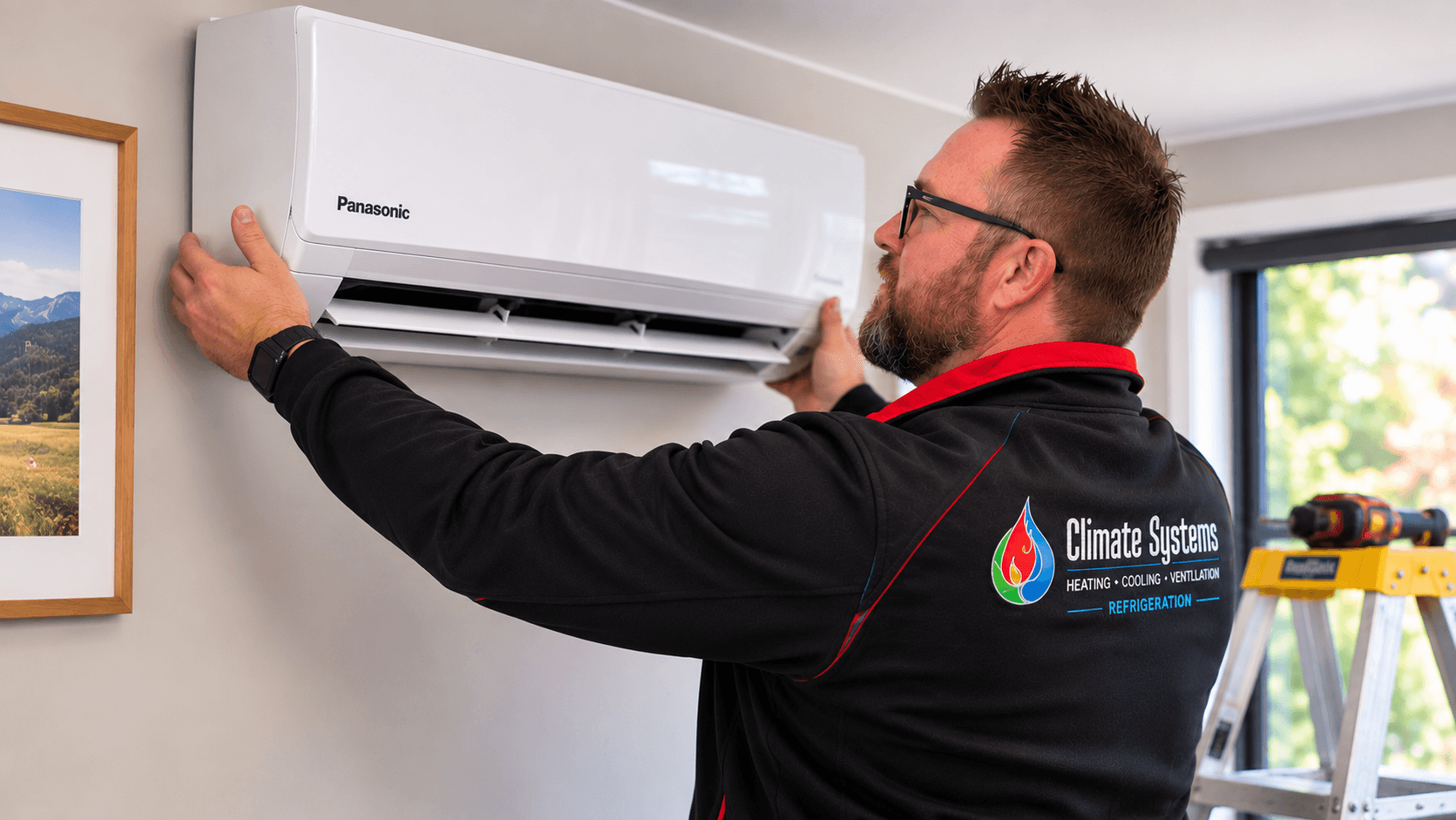
For a typical high-wall split-system heat pump, the work involves mounting the indoor unit securely, installing the outdoor unit and connecting the necessary services between them.
These include refrigerant pipework, electrical connections and condensate drainage.
Why the pipework matters
The refrigerant pipes allow the system to transfer heat between its indoor and outdoor components.
They need to be correctly installed and protected, with appropriate insulation and secure connections.
Where pipes run along an exterior wall, protective capping can help create a neat finish and protect the services.
In a new heat pump installation in Te Awamutu, Climate Systems documented the installation of a Panasonic high-wall system, including the outdoor condenser, refrigerant services and exterior pipework capping.
It's the sort of work homeowners might not pay much attention to once the installation is finished, but it forms an essential part of the completed system.
What about the water that comes from a heat pump?
When a heat pump operates in cooling mode, moisture can condense on the indoor coil.
That water needs somewhere to go.
The condensate drainage system is designed to carry it away safely rather than allowing it to collect inside the unit or damage surrounding surfaces.
Outdoor units can also produce water during normal operation, particularly when defrosting in winter.
Planning for drainage is therefore an important part of choosing equipment locations and completing the installation.
Step 4: Testing and Commissioning the Heat Pump
Installing the equipment is only part of the job.
Before a new heat pump is ready for normal use, the installer needs to complete the appropriate checks and commissioning procedures.
Depending on the system and installation, these can include checking refrigerant pipework integrity, evacuating the refrigerant circuit, confirming electrical and drainage arrangements, and testing the unit's operation.
These procedures help establish that the system has been installed correctly and is ready to operate as intended.
Climate Systems' Panasonic heat pump installation in Te Awamutu, Waikato describes pressure testing, evacuation, commissioning and operational testing as part of the installation.
These are not simply finishing touches.
A heat pump can look perfectly installed from the outside, but appearance alone doesn't confirm that the refrigeration circuit, electrical connections, drainage and controls have all been checked properly.
Professional commissioning is one of the reasons choosing a suitably qualified installer matters.
Step 5: What Changes When You're Building a New Home?
Installing a heat pump in an existing house is different from planning heating and ventilation during construction.
In an existing home, the installer generally needs to work around finished walls, ceilings and established room layouts.
During a new build, there may be opportunities to plan the services before the interior linings are installed.
That can make it easier to coordinate pipework, drainage and ventilation ducting with the building's structure.
A Cambridge new-build project involving a Panasonic multi-split heat pump and Lossnay ventilation illustrates this approach.
The project documents refrigerant services being routed through timber framing during construction, alongside planning for the home's heat recovery ventilation system.
The work described is at the pre-installation stage, but it demonstrates why involving heating and ventilation specialists early in a build can be valuable.
It also highlights an important distinction: the multi-split heat pump provides heating and cooling, while the Lossnay system is designed to manage ventilation and recover some heat from outgoing indoor air.
They're complementary systems, but they perform different jobs.
If you're considering both, our article Does a Home Ventilation System Make Your House Warmer? explains how they relate to one another.
Step 6: Understanding How to Use Your New Heat Pump
Once installation and commissioning are complete, the next step is learning how to use the system effectively.
A heat pump may have several operating modes, fan settings, temperature controls and timer functions. Some models also offer Wi-Fi connectivity and additional control features.
It's worth understanding which settings are appropriate for heating and cooling, how to adjust airflow and what routine cleaning the manufacturer recommends.
In its Te Awamutu Netball Centre heat pump installation, Climate Systems installed a Panasonic wall-mounted system to provide heating and cooling for a community facility.
Although the needs of a community space differ from those of a family living room, the underlying principle is the same: the system should suit the space and the way it will be used.
For a homeowner, a good handover is an opportunity to ask questions before the installer leaves.
Where are the filters? How should they be cleaned? Which settings are best for everyday use? What should you do if the system doesn't seem to be performing properly?
Understanding the answers can help you get more from your new heat pump.
How Long Does a Heat Pump Installation Take?
One of the most common questions homeowners ask is how much disruption to expect.
A straightforward single-room installation may be completed within several hours. More complicated installations can take longer.
The time required depends on factors such as access, pipework routes, electrical requirements, drainage, the type of system and whether the property is an existing home or a new build.
A multi-split system serving several rooms generally involves more planning and installation work than a single high-wall unit.
The important thing is to discuss the expected work and timeframe with your installer beforehand.
A professional installation shouldn't be rushed simply to meet an arbitrary deadline.
What Should You Prepare Before Installation Day?
You generally won't need to do much, but a little preparation can make the process easier.
Make sure the installer can access the areas where the indoor and outdoor units will be positioned. Move fragile items and furniture away from the immediate work area where practical, and discuss any access restrictions beforehand.
If you're concerned about how the pipework will look, where water will drain or whether the outdoor unit might affect a walkway or entertaining area, raise those questions before work begins.
It's much easier to discuss an alternative position at the planning stage than after the equipment has been installed.
And if you have pets, it's sensible to keep them away from the work area while installation is underway.
Will One Heat Pump Be Enough for Your Whole Home?
Not necessarily.
A correctly sized heat pump can work very well in the space it was selected to heat and cool, but that doesn't mean it will automatically keep every room in the house comfortable.
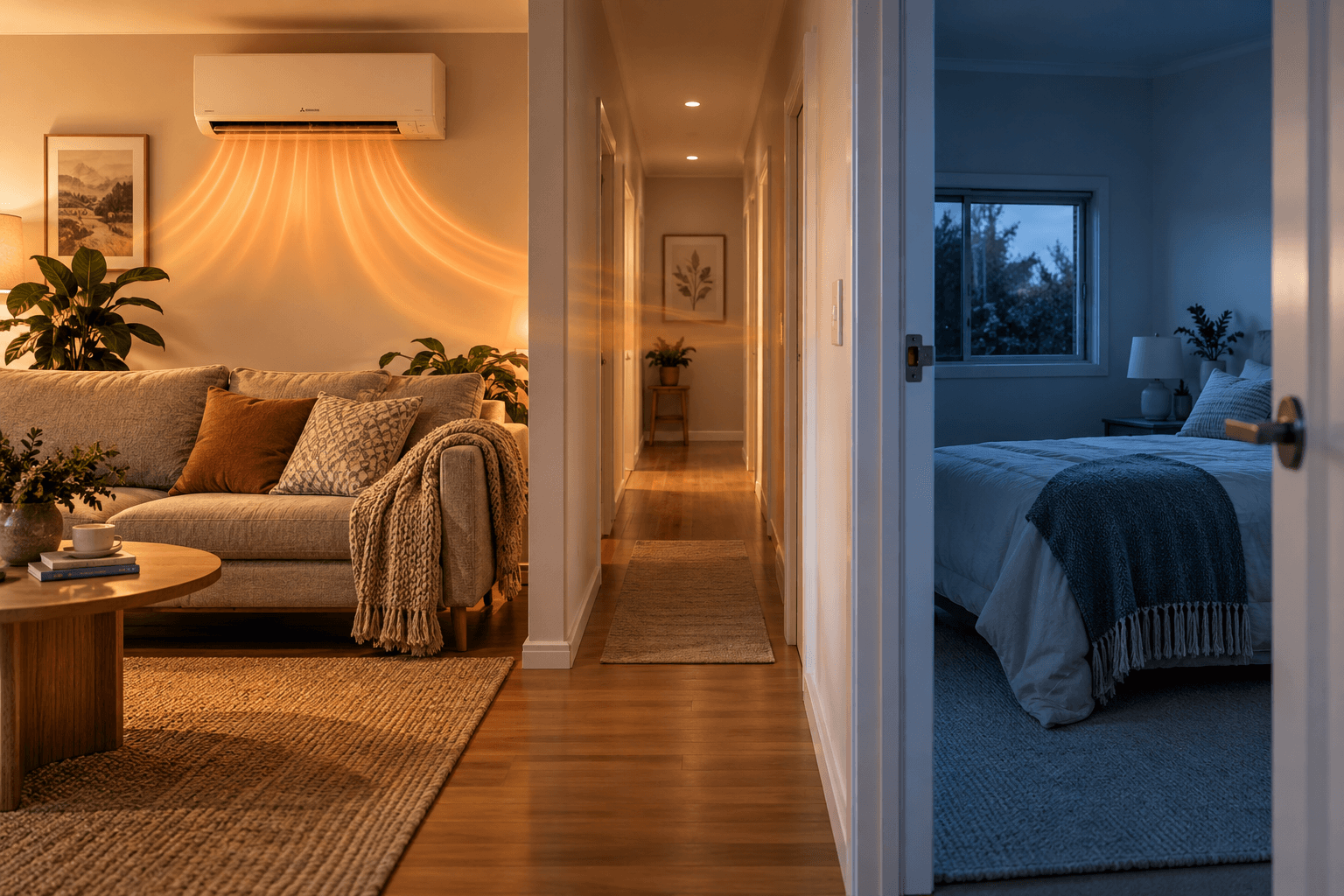
A warm living room and cold bedrooms are common examples of this problem.
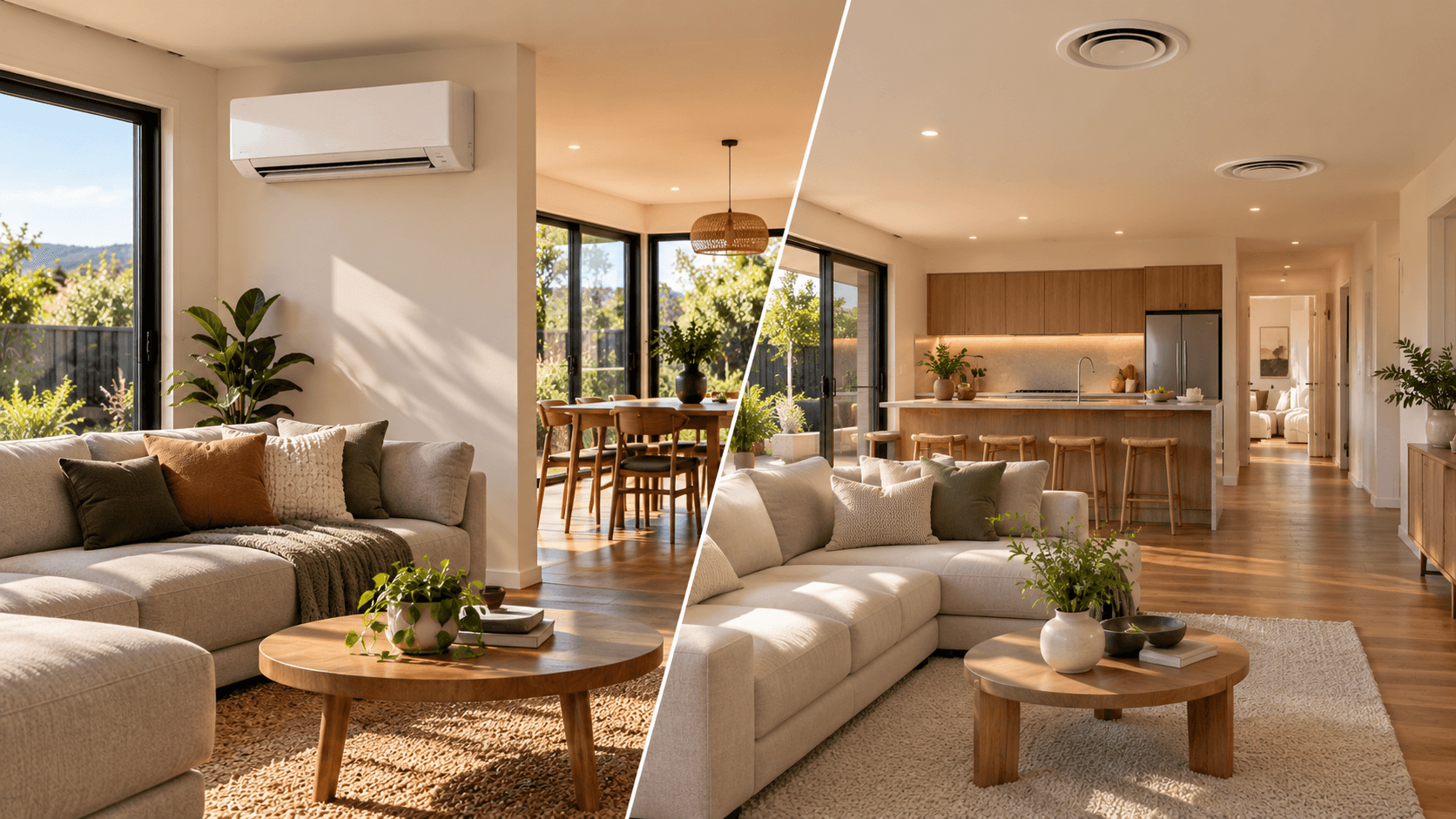
Depending on the layout, insulation and how rooms are connected, the solution might involve another heat pump, a multi-split system, ducted heating or a different approach to distributing warmth.
We explore those options in Do I Need Another Heat Pump or a Whole-Home Heating Solution?.
It's worth thinking about the wider home before committing to a single-room installation, especially if your main concern is uneven temperatures between rooms.
Common Questions About Professional Heat Pump Installation
Do I need an electrician to install a heat pump?
Heat pump installation involves electrical work that must be carried out by appropriately licensed people. Your installer should explain how the electrical requirements will be handled and whether any additional work is needed.
Can a heat pump be installed on any wall?
Not every wall or position is suitable. The installer needs to consider structural support, clearances, airflow, access, drainage and the route to the outdoor unit.
Will installing a heat pump damage my walls?
A typical split-system installation requires mounting points and a penetration for connecting services. A professional installer should explain the planned work and how the installation will be finished.
Can I choose where the outdoor unit goes?
You can certainly discuss your preferred location. However, the final position needs to meet the system's technical requirements, including airflow, access, drainage and suitable pipework routes.
Can a heat pump be installed during a renovation?
Yes. Renovations can provide opportunities to plan heating and cooling around changes to the home's layout. Where walls or ceilings are open, it may also be easier to coordinate concealed services.
Does a new heat pump still need servicing?
Yes. Even a properly installed heat pump needs routine care, including filter cleaning and maintenance in accordance with the manufacturer's recommendations.
Climate Systems also provides professional heat pump servicing for existing systems throughout the Waikato.
Final Thoughts
A professional heat pump installation involves much more than fixing equipment to a wall.
It begins with understanding the home, choosing the right system and deciding where the equipment should go. It continues through careful installation, testing and commissioning, and finishes with making sure the homeowner understands how to use the system.
Each stage matters.
The right heat pump in the wrong position may not deliver the comfort you expected. Equally, a tidy-looking installation isn't enough if the equipment hasn't been properly tested.
Taking the time to get those decisions right from the beginning can help you avoid disappointment later.
Planning a Heat Pump Installation in Waikato?
Whether you're replacing an older unit, installing your first heat pump or planning heating and cooling for a new home, Climate Systems can help you work through the options.
Based in Te Awamutu, Troy and the team work with homeowners throughout Hamilton, Cambridge and the wider Waikato.
Our approach starts with understanding what you want to improve, then recommending a system that suits your home rather than simply selling you another unit.
Explore our Heat Pump Installation & Air Conditioning service, or get in touch to arrange a free home comfort assessment.
Get the right solution, not just another install.